


Automated documentation
Track model history with less manual documentation
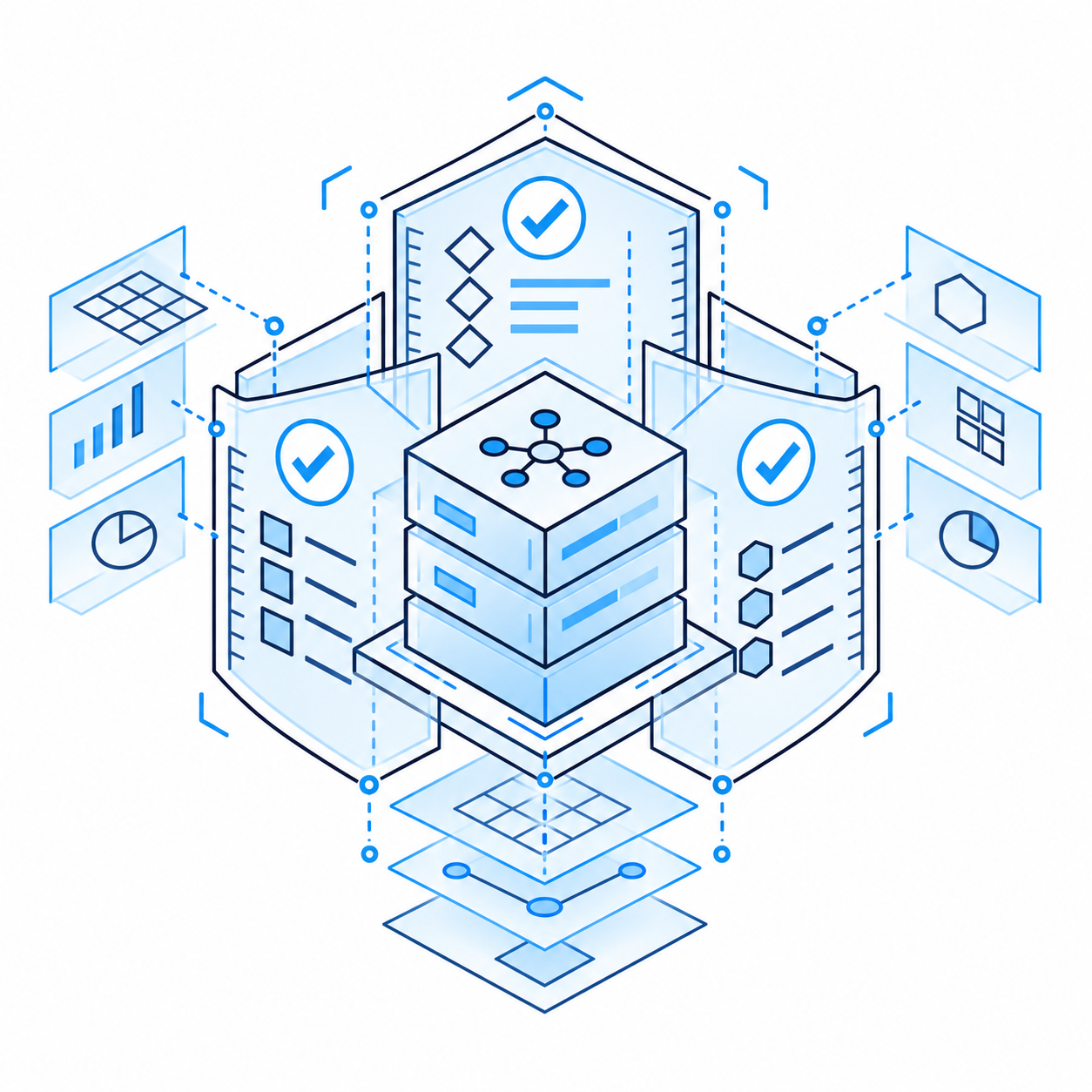
watsonx.governance records configured data sources, prompt templates, code versions, and test results. Your team can generate a consolidated record for review.
Deploying AI across business operations requires more than prompt guidelines. GrandView implements IBM watsonx.governance to track registered models, evaluate accuracy, detect drift and bias, and support audit documentation. You protect confidential company data while keeping business initiatives moving forward safely.
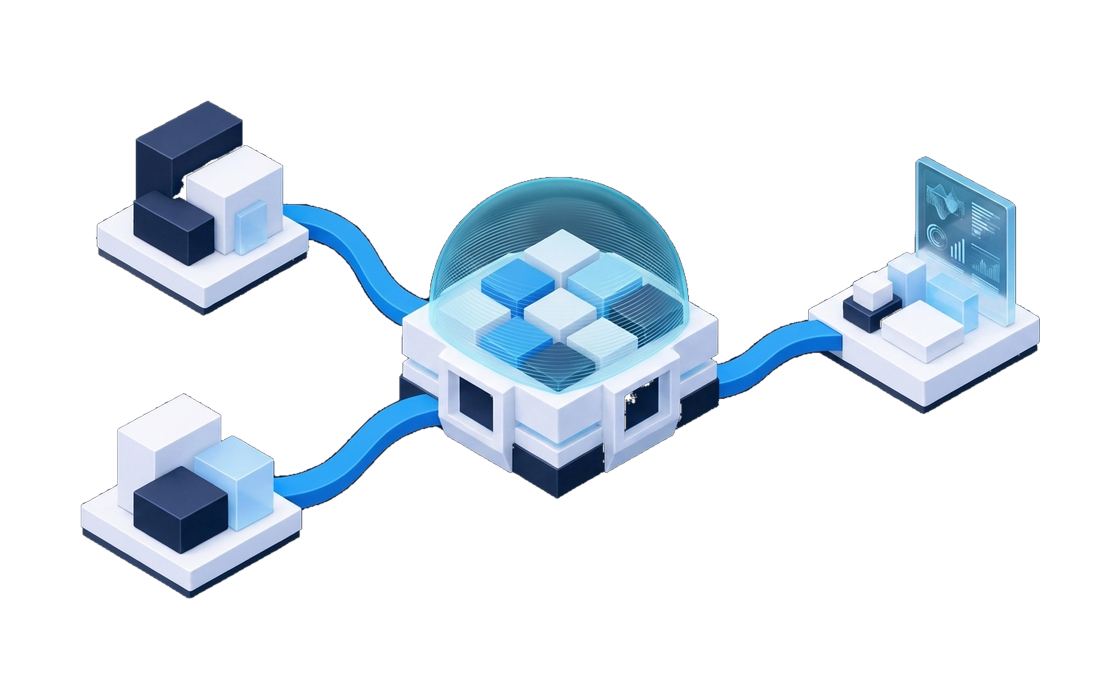
Implementing AI safety does not mean freezing innovation. Working with IBM and Red Hat, we help organizations set clear rules, monitor live model performance, and support regulatory reviews while limiting disruption to engineering teams.
watsonx.governance records configured data sources, prompt templates, code versions, and test results. Your team can generate a consolidated record for review.
Monitor configured metrics after deployment. The system evaluates answer quality, faithfulness, and fairness, and alerts your team when defined thresholds are crossed.
Apply consistent governance policies across IBM Granite, Azure OpenAI, Amazon Bedrock, and privately hosted open source models. You maintain central control while reducing dependence on a single model vendor.
The result is not another layer of administrative overhead. It is confidence that your AI initiatives comply with internal policies and external regulations from day one.
Discuss your governance priorities →Most enterprise AI risks do not come from malicious intent. They come from informal deployments, unmonitored model updates, and a lack of clear tracking across departments.
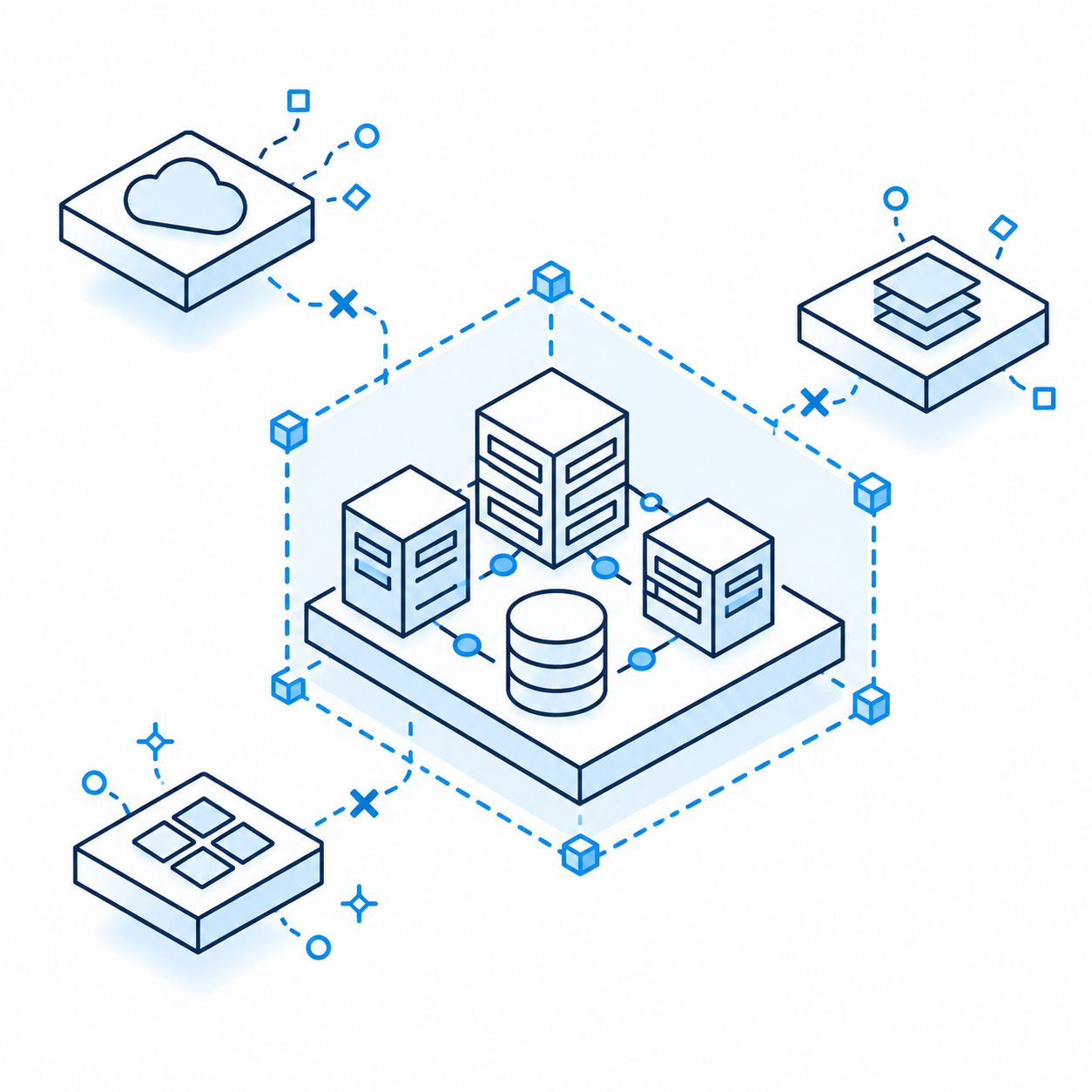
Individual business units test public and private AI tools independently. Leadership is left without an accurate inventory of what models are active, what data they access, or where company files are shared.
Establish a centralized enterprise inventory of all active models, prompt templates, and data endpoints, restoring total visibility to IT and compliance leadership.
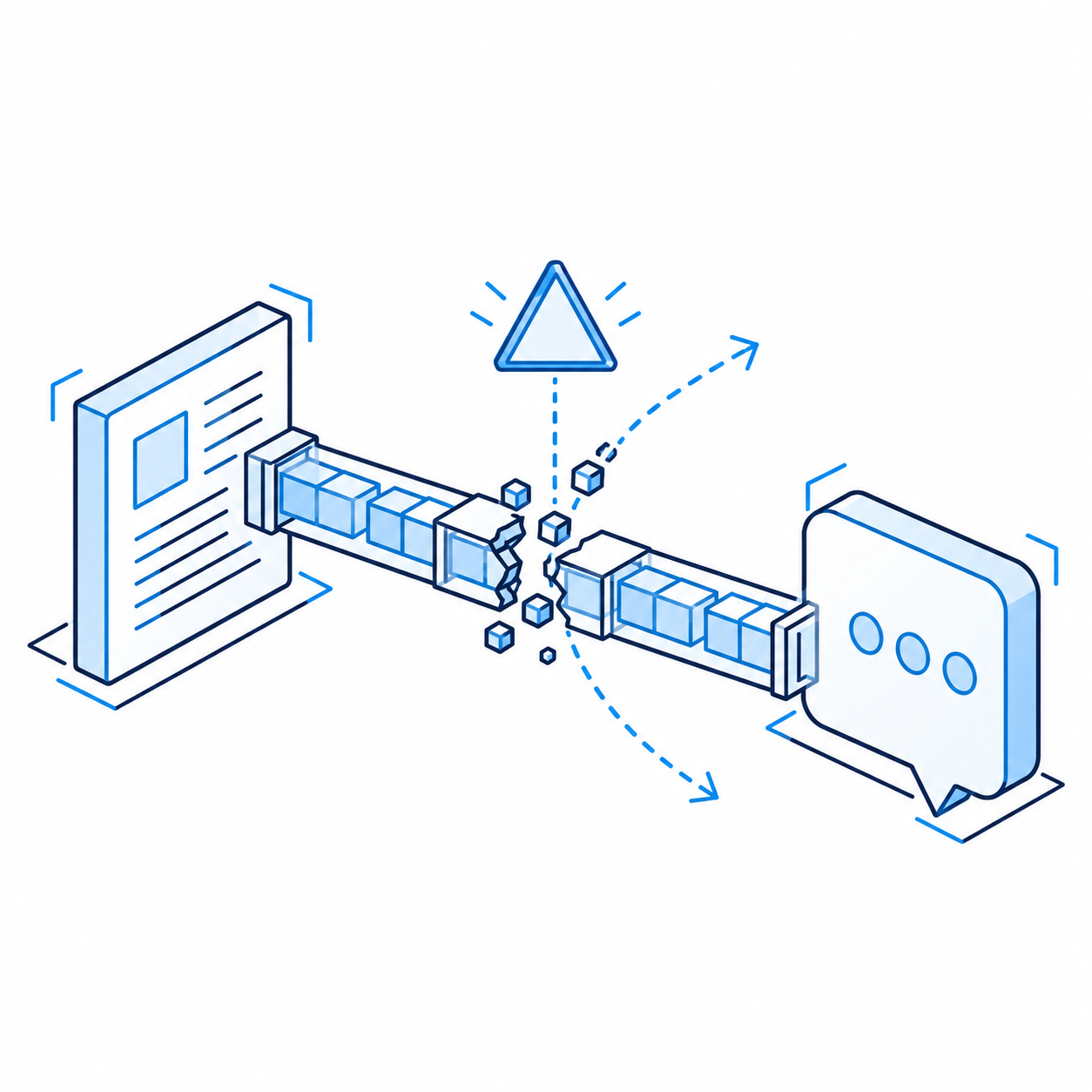
Without automated faithfulness testing, language models can invent facts or misinterpret technical policies. Relying on unverified answers in underwriting, contracts, or customer service creates immediate liability.
Implement automated evaluation pipelines that test answer relevance, source faithfulness, and hallucination rates against verified company knowledge bases.
The EU AI Act creates legal obligations that vary by use case, risk classification, and organizational role. NIST AI RMF provides a voluntary operating model through Govern, Map, Measure, and Manage. Relevant U.S. banking organizations may also consider current interagency model risk management guidance. Each regime requires a distinct control and evidence mapping.
Map each AI system to its specific regulatory duties and voluntary framework outcomes, creating defensible documentation without one-size-fits-all overengineering.
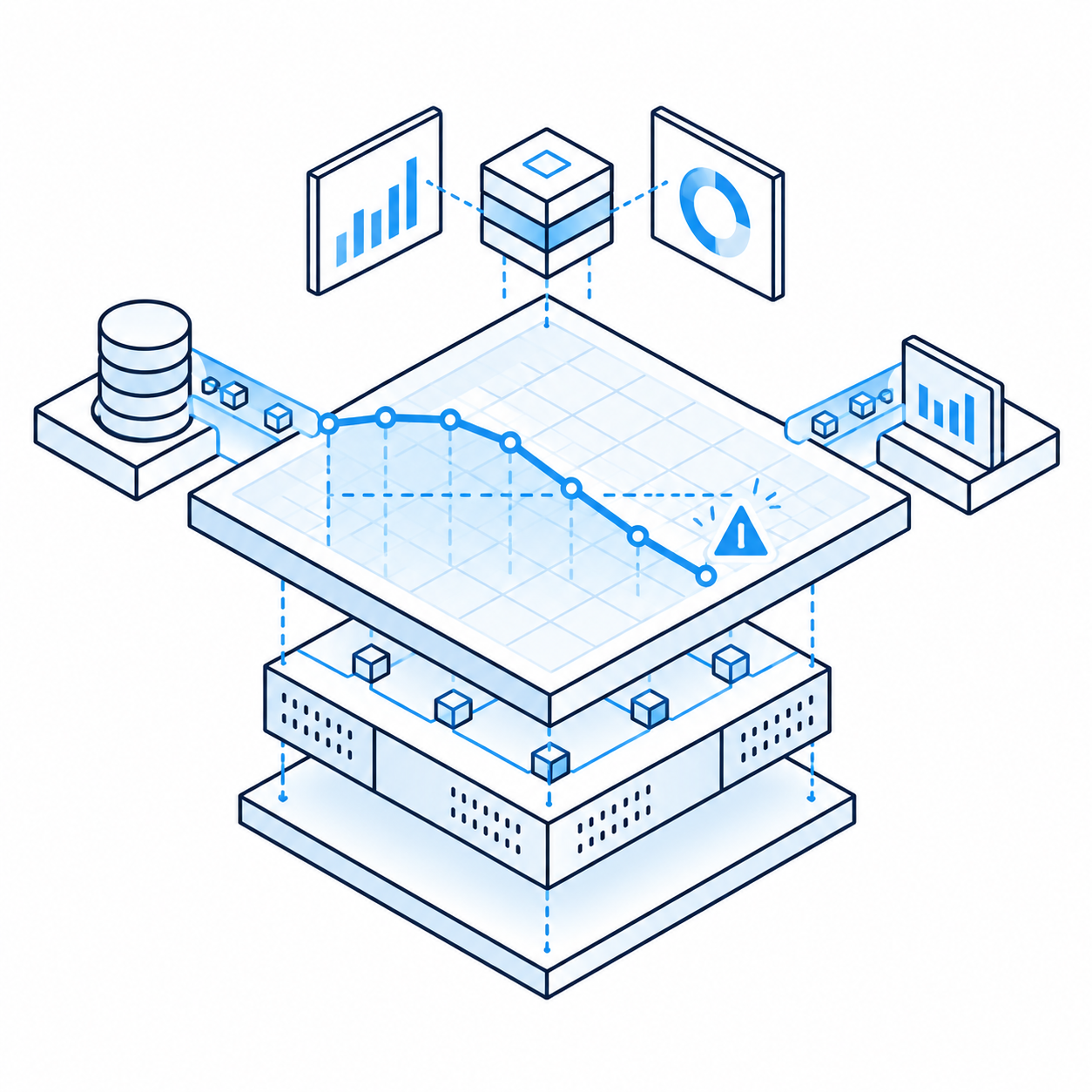
A model that scored well during initial testing can degrade as customer habits and market data shift. Without ongoing monitoring, accuracy drops may go unnoticed and affect business transactions.
Configure continuous production telemetry to monitor data drift, concept drift, and output fairness, alerting engineering teams the moment metrics deviate.
A controlled, step-by-step transition
Catalogue active models and prompts Evaluate accuracy, drift, and bias Automate audit records and compliance
Because ungoverned AI, unmonitored updates, and fragmented tools reinforce each other, GrandView establishes a central governance control plane before operational risks compound.
| Governance Capability | Traditional / Manual Review | GrandView watsonx.governance Implementation |
|---|---|---|
| 01 Model Inventory | Fragmented spreadsheets maintained manually by individual teams, leaving leadership unaware of active models and third-party API dependencies. | Unified enterprise catalog for registered models, versions, prompt templates, data sources, and designated business owners. |
| 02 Accuracy & Faithfulness | Occasional spot checks after user complaints or audit requests, allowing silent hallucinations to reach clients and create immediate legal liability. | Continuous automated testing measuring whether answers match reference files and factually grounded source records. |
| 03 Drift Detection | Discovered months later during periodic performance reviews after degraded model scoring has already compromised business decisions. | Configured monitoring alerts engineers the moment concept decay or data distribution shifts cross defined thresholds. |
| 04 Fairness & Bias Tracking | Static pre-launch reviews that completely miss ongoing demographic shifts and real-world runtime discrepancies. | Ongoing runtime evaluations checking model outcomes against protected attributes with automated threshold alerts. |
| 05 Documentation & Audits | Weeks spent compiling emails, pull requests, and test logs under frantic panic before legal, supervisory, or internal compliance audits. | Automated AI Factsheets updated continuously across the model lifecycle, recording versions, evaluations, and approvals. |
| 06 Multi-Cloud Governance | Incompatible tools and fragmented metrics across separate clouds, locking organizations into vendor silos or fractured monitoring. | Single control plane for IBM Granite, Azure OpenAI, AWS Bedrock, and privately hosted open source models on OpenShift. |
| 07 Regulatory Readiness | Unclear obligations and incomplete evidence creating exposure to fines, supervisory scrutiny, or stalled business rollout. | Clear mapping of applicable EU AI Act duties, voluntary NIST AI RMF alignment, and direct integration with IBM OpenPages GRC. |
AI governance touches multiple disciplines. We align your risk committee, security officers, legal team, and IT leaders around shared metrics and clear accountability.
Maintain a centralized model inventory with enforceable risk thresholds
Untracked spreadsheets, unknown model deployments across business units, and manual panic when supervisory inquiries or model risk reviews arrive.
See which models are registered, assign risk tiers based on business impact, and receive automated alerts when configured accuracy or fairness thresholds are crossed.
Reduce the risk of confidential data exposure and unauthorized model access
Staff pasting proprietary company code and customer records into unvetted public LLMs without access controls, retention boundaries, or audit logs.
Verify that sensitive files and customer records use role-based access. Configure third-party models with approved access, logging, and data retention policies.
Support EU AI Act readiness and NIST AI RMF alignment with verifiable records
Ambiguity over whether models qualify as high-risk under EU AI Act, scattered compliance documentation, and weeks spent compiling evidence for legal review.
Determine which obligations apply to each AI use case based on role and risk classification. Maintain evidence for legal duties while using NIST AI RMF to structure governance.
Run a unified governance framework across hybrid and multi-cloud environments
Deploying separate, siloed monitoring tools for IBM, Azure OpenAI, AWS Bedrock, and open-source models, fracturing enterprise architecture.
Manage IBM watsonx, Azure OpenAI, AWS Bedrock, and private models on OpenShift through one central control plane without slowing down engineering sprints.
The assessment establishes an agreed governance baseline across departments. Implementation follows a phased sequence without disrupting ongoing development.
Explore the governance assessment ↓From early model selection to production monitoring, the platform supports policy controls across selected lifecycle stages.
AI projects within the agreed scope are registered with their intended business purpose, owner, and risk classification. Connectors link each use case to code repositories, data endpoints, and prompt libraries across any cloud.
Full visibility into who built each model, what company data it accesses, and its designated risk classification.
Automated pipelines evaluate models before release and track them continuously in production. Metrics include data drift, concept drift, answer relevance, faithfulness, and toxic content.
Automated evaluations alert your teams before flawed answers impact business operations or customer decisions.
The system logs evaluation metrics, version changes, and sign-offs into automated Factsheets. Reports export directly into risk management systems like IBM OpenPages or executive dashboards.
Defensible evidence ready for internal audits, supervisory reviews, and EU AI Act readiness.
You receive a documented inventory of active models, automated continuous evaluation pipelines, and a verified governance control matrix—connecting compliance obligations with daily operations.
 ENTERPRISE AI GOVERNANCE ADVISORY
A searchable inventory of registered models, prompt templates, and data sources within the agreed scope. We catalog business purpose, owner, lifecycle state, and designated risk tier in one place.
ENTERPRISE AI GOVERNANCE ADVISORY
| REGISTERED MODEL | MONITORED METRIC | RUNTIME SCORE | GOVERNANCE STATE |
|---|---|---|---|
| Claims Policy Assistant watsonx.ai runtime • v2.4 | Faithfulness & RAG Guard Hallucination drift monitor | 98.6% (Pass > 95%) | Factsheet Logged ✓ |
| Risk Scoring Engine Azure ML endpoint • v3.1 | Concept & Data Drift Production baseline: Q4 | 1.2% (Alert > 5%) | Active Baseline ✓ |
| Customer Support LLM AWS Bedrock • Claude 3.5 | Protected Attribute Disparity Demographic parity verify | 0.00% Variance | CRO Signed ✓ |
Continuously updated digital records detailing model lineage, evaluation scores, and deployment approvals. AI Factsheets capture the history required for internal compliance reviews and external audits.
ENTERPRISE AI GOVERNANCE ADVISORY
A practical mapping that separates applicable EU AI Act duties, voluntary NIST AI RMF outcomes, and sector-specific banking guidance where relevant—establishing clarity across your risk, legal, and engineering teams.
From assessment to governed AIWork with GrandView to turn regulatory uncertainty into a lean, automated governance framework.
Schedule your governance assessmentWe deploy IBM watsonx.governance using a four-step path that establishes baseline control while limiting disruption to ongoing projects.
We catalogue your existing AI initiatives, review prompt libraries and model endpoints, identify untracked tools, and map your regulatory requirements across business units.
We configure IBM watsonx.governance on your hybrid cloud or Red Hat OpenShift environment. We establish risk tiers, drift thresholds, and approval workflows tailored to your policies.
We connect your first wave of production models, whether hosted on IBM watsonx, Azure OpenAI, AWS, or on-premises, and run initial tests to generate baseline Factsheets.
We configure alert thresholds and schedules, connect reporting into your risk and GRC workflows, and train your risk, legal, and engineering teams to manage ongoing governance independently.
Bring your current AI use cases, upcoming regulatory deadlines, or model monitoring challenges to a direct conversation with our practice leads. No junior sales reps, just practical architecture.

 IBM watsonx.governance & Model Risk Governance Expertise